Sound
We keep whistles for safety, not to chase pace. Cues are short, at the wall, and timed so you are not startled with your face in a turn.
Swim program · Newmarket
A swim block with us is a string of short efforts and clean rests, written the same on paper, on a board, and in the few words a coach will say at the wall. We avoid racing strangers you never asked to meet, and we avoid naming “performance” in a way that makes the water feel like a test you did not sign up for.
We keep turns and drills in a part of the hour when the lane is thinnest, so the middle of a busy set stays yours to manage at your own breath.
Wall coaching Rest written first Thinnest-lane turns No mid-lane shouts
Before you get wet
Air temperature, draft, and a short note on filter noise land on a corner board and in the pre-session email. They matter because a cold draft over wet shoulders changes how a set feels, even when the water itself has not moved. We would rather you read that in a line than find out in the middle of a long pull.
The lane you book is a guide: if two visitors end up a step apart in comfort, the coach can suggest a different line for that hour. We will not re-sort people for sport; we will move lanes when the mix makes the water safer and calmer for everyone in it.
Warm-up length and pace band, a short build, a main block with a repeat pattern you can read at a glance, and a turn or stroke reminder at the end, only if the lane is open enough for the drill. If we cut a line because the day is full, the sheet says so, so you are not left guessing on the wall.
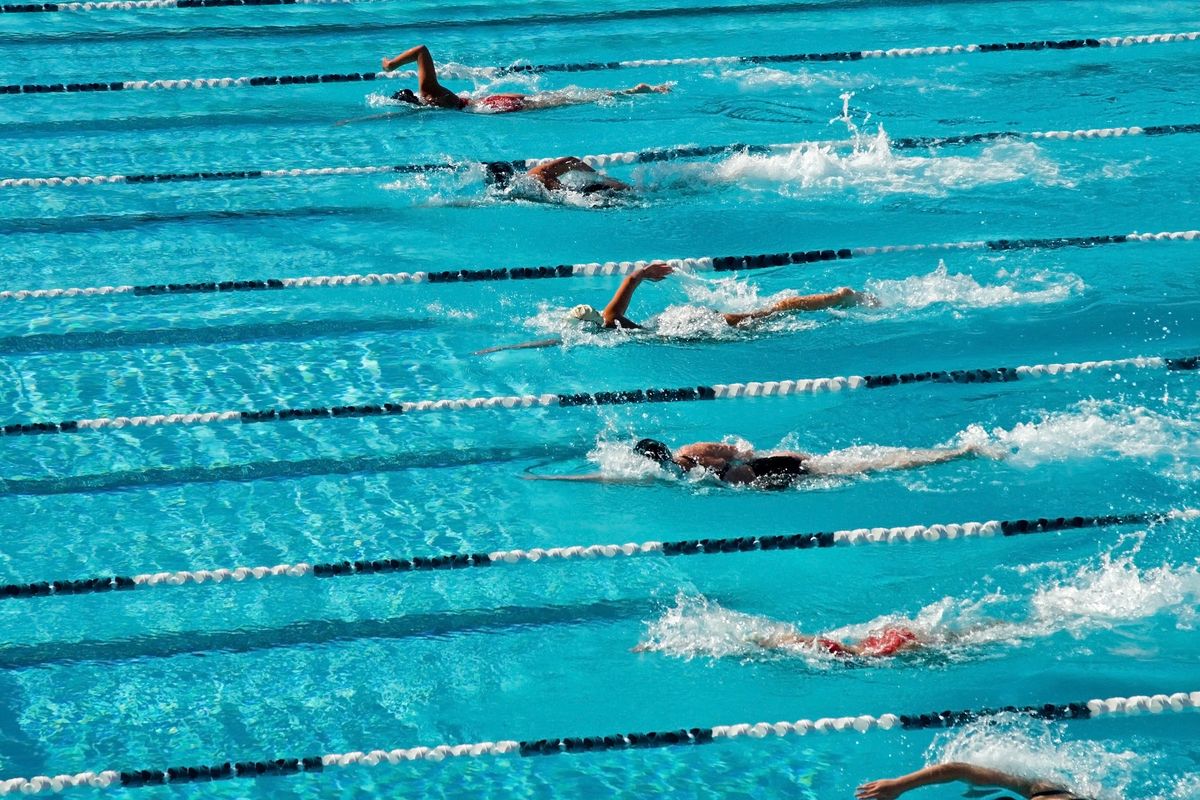
Ask for a sample layoutThe line work in the hero is a simple cue, not a technique mandate: your coach still meets you at the wall in plain language.
Fins, paddles, and buoys live on a rack with labels. We dry porous tools between blocks and we ask you to place items face-out. Passing uses clear flags and a short pause: mid-lane is not a place to overtake with a hard sprint if someone has already signalled a slow line.
We keep whistles for safety, not to chase pace. Cues are short, at the wall, and timed so you are not startled with your face in a turn.
Bottles and rests sit past the backstroke flags so the middle stays even for the lane. If you need a quick sip, a tap on the cap ahead does the job.
We surface lane speed bands each hour, not once a day, because the mix of people in the building changes the feel of the water, not only the number on a sign.
We expand here what reception often says out loud, so the screen can carry the same calm tone as a person on Broadway would.